Dental Sealants

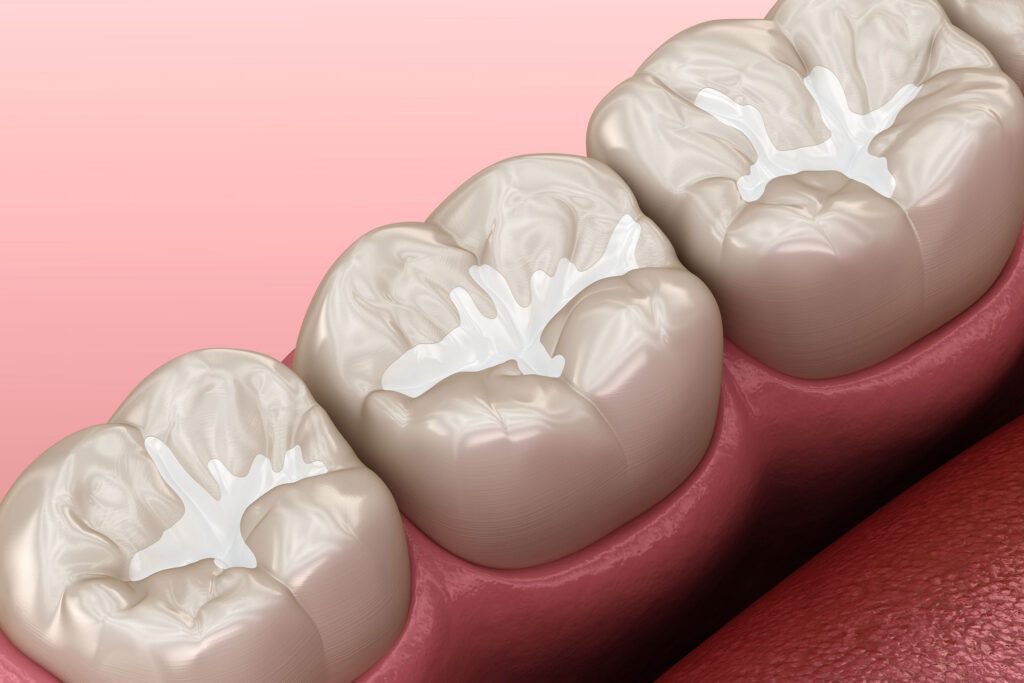
The chewing surfaces of back teeth have grooves too narrow for a toothbrush to reach, and that is where most cavities start. A sealant is a thin resin coating flowed into those grooves and cured, leaving a smooth surface that food and bacteria cannot pack into.

Applying one takes a few minutes. No drilling, no anesthetic, nothing to recover from.

What this includes:

Frequently Asked Questions

What is a dental sealant?

A thin resin coating flowed into the grooves on the chewing surfaces of back teeth and then cured. Those grooves are narrower than a toothbrush bristle, which is why they are where most cavities start. Sealing them leaves a smooth surface that food and bacteria cannot pack into.

No. There is no drilling, no anesthetic, and nothing to recover from. The tooth is cleaned and prepared, the sealant is applied and cured with a light, and it takes a few minutes per tooth.

They are most valuable on permanent molars soon after those teeth come in, before decay has a chance to start. Beyond that, anyone whose back teeth have deep grooves and who is prone to decay is worth considering, including adults. Dr. Kary will tell you whether your grooves are deep enough to be worth sealing.

Several years, though they wear under chewing forces and can chip or thin out. They are checked at every routine visit and reapplied where they have worn through. A sealant that has partly worn away is easy to repair; the point of checking is to catch that before decay starts underneath.

Yes. Sealants are well established and endorsed by major dental organizations as an effective preventive measure. The most common concern raised is BPA exposure; the amount released by dental sealants is far below the level considered harmful, and it occurs briefly at placement rather than continuously.

Yes. Adults with deep grooves, a history of decay, or new decay appearing on chewing surfaces are reasonable candidates. It is an inexpensive, non-invasive way to avoid a filling in a tooth that has not been drilled yet.

No. Sealants only protect the grooved chewing surfaces they cover. The sides of the teeth and the areas between them, where flossing matters, are just as vulnerable as before. Sealants reduce risk in the highest-risk spot; they do not replace daily care.

Not over active decay, which has to be removed first. Very early decay confined to the enamel of a groove can sometimes be handled conservatively and then sealed, without a conventional filling. Which situation applies is determined at the exam.

The tooth returns to the risk level it had before, which is why they are inspected at routine visits and reapplied as needed. Losing one is not an emergency and does not damage the tooth. Mention it if you notice a change in how a tooth feels when you bite.

Most dental PPO plans cover sealants as preventive care, frequently at 80 to 100%, though many limit coverage to specific teeth or to patients under a certain age. Even without coverage they are among the least expensive treatments in dentistry, particularly against the cost of the filling they prevent. We verify your benefits beforehand.

Schedule an Appointment

You can also call or text (301) 301-3148 to schedule.
New patients: please allow 60 to 90 minutes for your first visit.

Practice Hours: