Dental Bridges

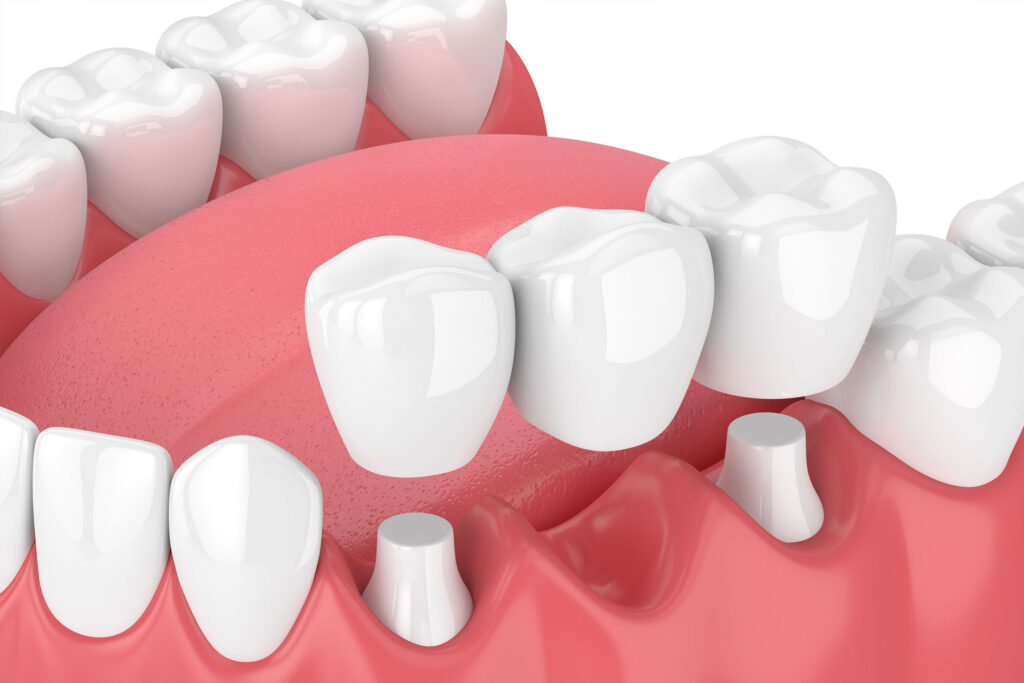
A bridge replaces one or more missing teeth by anchoring to the natural teeth on either side of the gap. It stays in place, so there is nothing to remove and nothing that shifts while you eat.

Bridges are designed on computer and milled from zirconia in this office. Treatment starts with a digital scan on the Medit i900C intraoral scanner, not an impression tray.

What this includes:

Frequently Asked Questions

What is a dental bridge?

A bridge replaces one or more missing teeth by anchoring to the natural teeth on either side of the gap. The replacement tooth is joined to crowns that fit over those neighboring teeth. It is fixed in place, so there is nothing to remove and nothing that shifts while you eat.

An implant replaces the root as well as the crown and leaves the neighboring teeth untouched, which makes it the better long-term choice in most cases. A bridge makes sense when the adjacent teeth already need crowns, when bone volume rules out an implant, or when you want a fixed result without surgery. Dr. Kary will walk you through the trade-offs for your specific situation.

Commonly a decade or more, and often considerably longer with good hygiene and regular visits. Longevity depends heavily on keeping the supporting teeth healthy, since decay or gum disease in an anchor tooth is what usually ends a bridge's life rather than the bridge itself failing.

Yes, for a traditional bridge. The supporting teeth are reshaped to receive crowns, which is why a bridge is a better fit when those teeth already need restoration. If they are perfectly healthy and untouched, that is a point in favor of an implant instead.

Fewer than most offices require, because bridges here are designed on computer and milled from zirconia in this office rather than sent to an outside laboratory. The exact number depends on the span and whether the supporting teeth need other treatment first. Dr. Kary will tell you what to expect at the consultation.

The work is done under local anesthetic and is comparable to having crowns placed. Some sensitivity in the supporting teeth for a few days afterward is normal. Sedation is available at every level if you would prefer not to be aware of the appointment.

Regular floss will not pass between the teeth, so you use a floss threader, superfloss, or a water flosser to clean beneath the span where it meets the gum. This is the part that decides how long the bridge lasts, and we will show you the technique when it is seated.

Yes, though every additional tooth in the span puts more load on the same two supporting teeth. Beyond a certain length, implants or an implant-supported bridge become the more durable option. The cone-beam CT scan and an evaluation of the supporting teeth determine where that line falls in your case.

Usually, yes. The old bridge is removed and the supporting teeth are evaluated, since decay underneath is the most common reason a bridge fails and is not visible until it comes off. Depending on what is found, the replacement may be another bridge or a different approach, and Dr. Kary will tell you what he finds before proceeding.

Most dental PPO plans cover bridges as a major procedure at around 50%, usually with a replacement frequency limit. Because a bridge involves multiple units, it can consume a large share of an annual maximum, so timing across benefit years sometimes helps. You receive a written estimate before treatment begins.

Schedule an Appointment

You can also call or text (301) 301-3148 to schedule.
New patients: please allow 60 to 90 minutes for your first visit.

Practice Hours: